Mowing performed at the correct height, frequency, and technique is essential to the health and density of your lawn. Every variety of grass has an ideal cutting height. A common mistake people make with their lawn is thinking they have to mow all the time and stop the grass from getting too tall. We will be discussing the proper mowing height and techniques for Bermuda and Fescue grass.
Bermuda:
Bermuda grass is a consistent warm-season grass. It returns every year and grows most aggressively from late spring through the hot summer months. This grass is quite sensitive to cold temperatures. The best mowing height for Bermuda grass depends on the variety that you’ve grown on your lawn. Unlike common Bermuda grass which has an inch-long stem, hybrid Bermuda grass varieties have been cross-bred to have shorter stems and low-lying crowns.
Hybrid Bermuda grass mowing height = 1 1/2 inches
Common Bermuda grass mowing height = 2 inches
The best time to mow your common Bermuda is when it reaches a height of about three inches. Therefore- after cutting off one inch (one-third of three inches), you should be left with about two inches of lush green common Bermuda grass. If you allow your Bermuda Grass to grow much higher than about 3 inches, you will scalp your lawn by removing most of the green portion of the grass when you mow. This is not only ugly, but it is absolutely horrible for your lawn. If compounded by heat and drought, scalping during the summer can kill areas of your lawn.
THIS EXAMPLE IS DEPENDENT UPON THE TERRAIN. MOST RESIDENTIAL YARDS IN OUR AREA DO NOT ALLOW FOR BERMUDA TO BE CUT LOWER THAN 3 INCHES. IF YOU DO HAVE A VERY LEVEL LOT THEN YOU CAN MOW YOUR BERMUDA AT THE HEIGHTS LISTED ABOVE.
For Bermuda grass, spring normally is a period of fast and rapid growth. It’s advisable to mow lower than the recommended height at this time of the year, to remove the dead leaf blades left behind from the winter dormancy period. From June-September, you should mow your Bermuda grass lawn less frequently during these months; preferably once every week.
You can also increase the mowing height a little bit above the recommended height as leaving behind longer leaf blades helps minimize water evaporation. By August, you should have reduced the frequency of your mowing to only when necessary.
Fescue:
Fescue is a cool-season grass, meaning most of the growth occurs during the spring and fall months. Fescue is a resilient, low-maintenance grass. It can withstand drought conditions and needs fertilizer infrequently. Overall, the ideal tall fescue mowing height is 4 inches. This is a safe length to mow your tall fescue any time of the year.
From March-May, mow your tall fescue lawn as low as 3 inches. Do not let the grass get so tall that mowing it would remove more than ⅓ of the height. This may mean mowing your lawn as often as once a week.
From June-August, mow your lawn to 4 inches. Do not allow your grass to get taller than 5 inches.
From September to November, mow your lawn to 3.5 inches.
From December to February, mow your tall fescue lawn to 3 inches.
Tall Fescue grass grows in bunches. Therefore it is highly suggested that you mow them tall. The taller the shoots of grass means the deeper the roots penetrate. Lengthier leaves allow much better photosynthesis, helping the grass grow better and strengthen its roots. Mowing the tall fescue grass higher also helps in preventing the growth of weeds. Along with mowing frequently, it is required that you should never cut your grass less than one-third of its height. Mowing your lawn less than one-third of its height can cause severe damage to the grass.
Should You Change Direction Each Time You Mow?
Yes! Why? Because when grass is mowed in the same direction over and over, it’s trained to lean one way. Also, going over the same tracks each time can cause rutting and soil compaction, which is essentially when soil particles get packed too tightly, making it hard for water and air to reach lawn roots.
Also, mowing in just one direction makes the lawn look worn out over time. Ideally, grass stems should grow straight up and stand tall. Mowing in different directions helps make that happen.
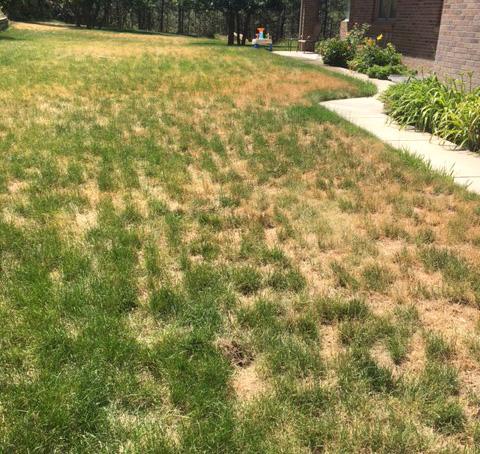
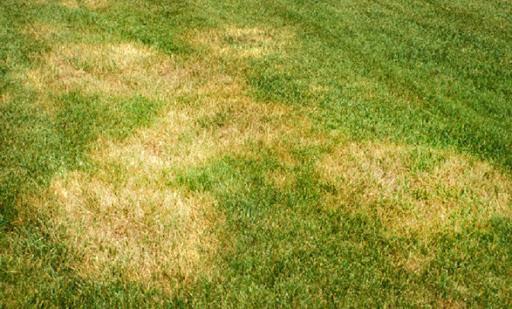
When summer sizzles, a lawn can easily fizzle, trading lush green for crispy brown shades. No one wants unsightly brown spots taking over their once-green stretch of luscious lawn. There are multiple causes of these spots, including drought, brown patch, or dollar spots. But in order to solve this problem, you have to know exactly what you’re dealing with.
Drought Stress:
Like any plant, grass reacts to summer's high temperatures and lack of water with wilting, browning, or even death. To detect drought stress, locate a brown patch, and pull on the grass. If it won't pull easily from soil and is firmly rooted, it's likely brown due to drought. Push a screwdriver into the soil in brown and green lawn areas. If the blade slips easily into the green lawn and won't penetrate brown, the soil is dry. Next, look at the lawn as a whole. When drought is the culprit, brown patches appear randomly and in rough patterns. Lawn near a sprinkler head may be green, while the lawn further away is brown. Grassy areas in shade remain greener when parts in full sun turn brown due to drought. Lawn in low spots will remain green while higher areas turn brown.
Brown Patch:
Brown patch fungus, also known as large patch disease, is a declining turf condition caused by a single species of fungus, Rhizoctonia, and often occurs in mid-to-late summer when the weather is hot and humid — making conditions perfect for the fungus to thrive. Brown patch due to fungal problems usually shows up as irregular patches. If the disease has been active for a while, the inside of the patch may recover, leaving a ring of dead grass around it. Extremely rainy or humid weather can encourage fungal outbreaks, as can lack of sunlight and poor air circulation.
Dollar Spot:
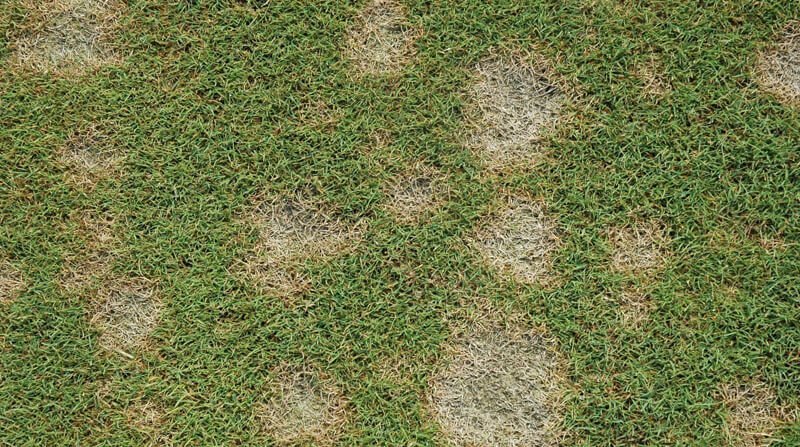
Dollar spot is caused by the fungus Clarireedia jacksonii, and this disease can make your beloved turf look like an unsightly patchwork. It is characterized by small, round, bleached straw-colored spots. It tends to occur from late spring to late fall, especially after a period of extremely moist weather. Dollar spot thrives in wet, humid conditions, so heavy dew, over-watering, late-day irrigation, and anything else that keeps grass leaves wet for long periods of time could lead to dollar spot. Other reasons you might be getting dollar spot in your lawn is from mowing too closely or not having enough fertilizer.
If you are needing assistance with brown patch or dollar spots in your lawn then contact LawnPro of Murfreesboro for treatment!
During the warmer months, you want to be able to enjoy your time outside without worrying about mosquitos, ticks, and fleas. With every mosquito bite you get, there's a risk of serious infection. You might scoff at first, but Mosquitoes cause more human suffering than any other organism -- over one million people worldwide die from mosquito-borne diseases every year. Not only can mosquitoes carry diseases that afflict humans, but they also transmit several diseases and parasites that dogs and horses are very susceptible to like malaria, dog heartworm, West Nile virus, and zika virus. With these diseases that are hitting a bit closer to home, it’s more important than ever to be vigilant about mosquito control for your home.
Now onto the next set of disease-carrying pests that can ruin your summer fun! As fleas and ticks become more resistant to common treatment methods, their populations rapidly expand in Tennessee. Ticks are second only to mosquitoes as vectors of human disease including Lyme disease, Rocky Mountain spotted fever, relapsing fever, ehrlichiosis, tularemia, and tick paralysis. It is important for the health of your pet, as well as the safety of your family, to include ticks in your yearly control services. Next, fleas are probably the most common external parasite of dogs and cats worldwide. Fleas can carry and transmit several potential illnesses of importance to humans, including typhus and plague, and can transmit “cat scratch disease” among cats who can then spread the disease to humans. Additionally, fleas serve as an intermediate host for tapeworms, which can infect your pet and occasionally humans.
There are many options available for repelling these insects. However, if you don't have the time or desire to handle it yourself call LawnPro of Murfreesboro to set up treatment. We do one-time services up to regular treatments for the entire season. LawnPro of Murfreesboro will help you reclaim your backyard by preventing these pests from settling and breeding, so you can relax and enjoy your outdoor space without unwanted guests.
There are a
few times a year when it is critical for you to take some preemptive steps to
ensure that you have a beautiful and healthy lawn and landscape. Late winter (now) is one of those times! Let’s take a look at what you should be doing
now to make sure that you have the yard you desire for this growing season.
Pre-Emergent
February is the time in Middle
Tennessee to apply your first application of pre-emergence. It is important to do this before the end of
the first week of March. You will then
reapply in April based on our weather patterns.
We strongly recommend you visit Dickens Turf and Supply to purchase your
chemicals or contact a local weed control company to determine the right
product for your lawn. This application
will also include a fertilizer, and many times, a post-emergent herbicide to
kill weeds that are already in your lawn.
Some of you may read this and ask the question, “What is pre-emergent?” Well, this application creates a barrier in
the soil to prevent many types of weeds and unwanted grasses from ever taking
over your lawn. Not getting this barrier
down in time allows these unwanted weeds to rear their ugly head later in the
year. Once these weeds are in your lawn,
they become quite an eyesore to your lawn.
Tree Pruning
Next, late winter and early spring is a great time to prune back the majority of trees. Yes, this is the time to prune your crepe myrtles. It is important to use proper techniques when doing this. We now have the convenience of YouTube to learn how to properly prune these trees. We encourage you to either contact us to prune these properly for you or for you to study up before possibly injuring your tree when pruning.
Ornamental Grasses
Additionally, late winter is also a great time for you cut back your monkey grasses, fountain grasses, and other types of annual grasses. You want to do this now so that you can have these trimmed back before the grass begins its new growth.
The Lawn Guy
In conclusion, right now is the best time to call around and find the best lawn company to provide you with, not only the above services, but all lawn services. Lawn care companies begin to get very busy in March and will stay very busy. We recommend you make an appointment today with a few companies to obtain estimates and research which company is best for you. Getting ahead of the lawn rush is always a good thing. It allows you to reserve your spot and become a priority to your lawn care company before companies quit taking new customers due to being booked.
It’s January, and you may be thinking that there is nothing to consider when it comes to your lawn during this cold month. Wrong! It’s true that the most important time for your lawncare just passed as fall gave way to winter; however, there are still a few things that you can do to ensure a healthy lawn.
Clean Your Lawn!
It is very important for you to make sure that your lawn is free of debris. This time of year, the leaves have fallen, sticks litter the ground, and that newspaper full of ads that you don’t want often sits in your lawn. Go pick those up…all of it! Leaves, sticks, newspapers, and other items left on your lawn suffocate your grass. This also invites diseases to these covered areas. Do this now so you don’t have a spotty and diseased lawn come spring!
Minimize Traffic
No matter what time of year it is, you never want to allow repetitive traffic on your lawn. This mats down the grass and eventually creates an unwanted path. A lawn can be even more vulnerable to traffic during the dormant season. And, whatever you do, please avoid walking on a frozen or frosted lawn. This is not good for your grass at all.
Avoid Water
If you haven’t already done the following, I want you to do this right away after you finish reading this. It is very important to keep water from forming inside your gas tanks and cans. Whether you purchase ethanol or non-ethanol gas, water still forms in your containers. The best thing to do is fill your gas tanks and cans all the way up. Next, add the proper amount of a product such as Stabil. Doing this will eliminate the water, allow your engines to start right up in the spring, and keep you from spending money at the mechanic shop in March.
Protect Your Home
Now that the leaves have all fallen from the trees, your gutters are undoubtedly full and possibly clogged. Clogged gutters create many issues to your home that can become quite costly. Get out the ladder and spend a couple of hours to make sure your gutters are working properly so that you don’t spend a great deal of money later.
If you are unable or simply don’t want to take care of any of the items listed above, then give us a call, and we will gladly come out and take care of these things for you at a fair price with exceptional service.