Three of the most common summer, grassy weeds are dallisgrass, crabgrass, and goosegrass. Here, we are going to discuss how to identify and control each of these stubborn weeds.
Dallisgrass:
Identification:
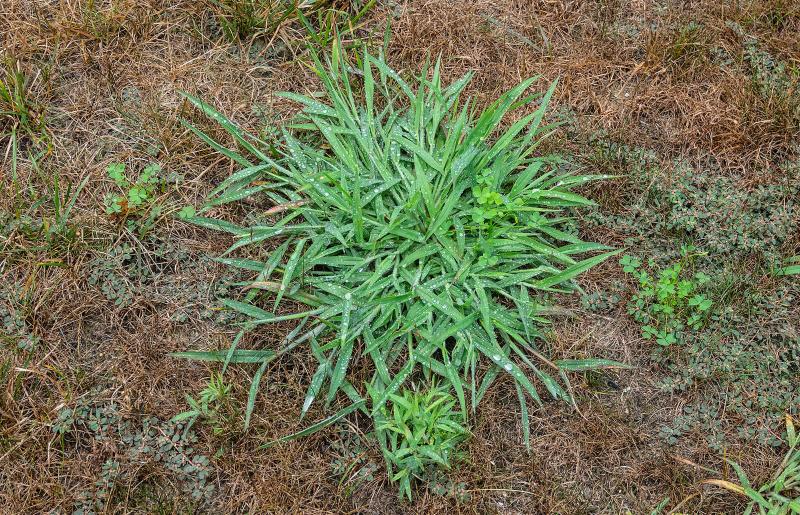
Dallisgrass is a perennial weed that grows in a circular clump and these ring formations can grow to cover and smother the surrounding grass in your garden, as well as the actual plant. This weed is coarse in texture and it grows tall and upright. Also, its seed heads are quite large, they have tiny black spots on them, and they grow off the side of its stem.
There is no such thing as a Dallisgrass seed because they have short rhizomes and a continuously growing underground stem. This makes it very hard to control. They tend to achieve root establishment quickly when the soil is moist. They can grow back from the root system every year, making them one of the most troublesome types of weeds.
Remedy:
The answer to how to kill dallisgrass is threefold: lawn health, pre-emergent, and post-emergent attacks. The first method of dallisgrass control is to maintain a healthy, densely planted turf through proper watering, mowing, and fertilization. The second stage in how to kill dallisgrass involves pre-emergent control. The pre-emergent herbicides napropamide, oryzalin, pendimethalin, or combinations of benefin plus oryzalin are effective to prevent dallisgrass seed from germinating. The third stage is post-emergent control treatments to kill this stubborn weed.
Crabgrass:
Identification:
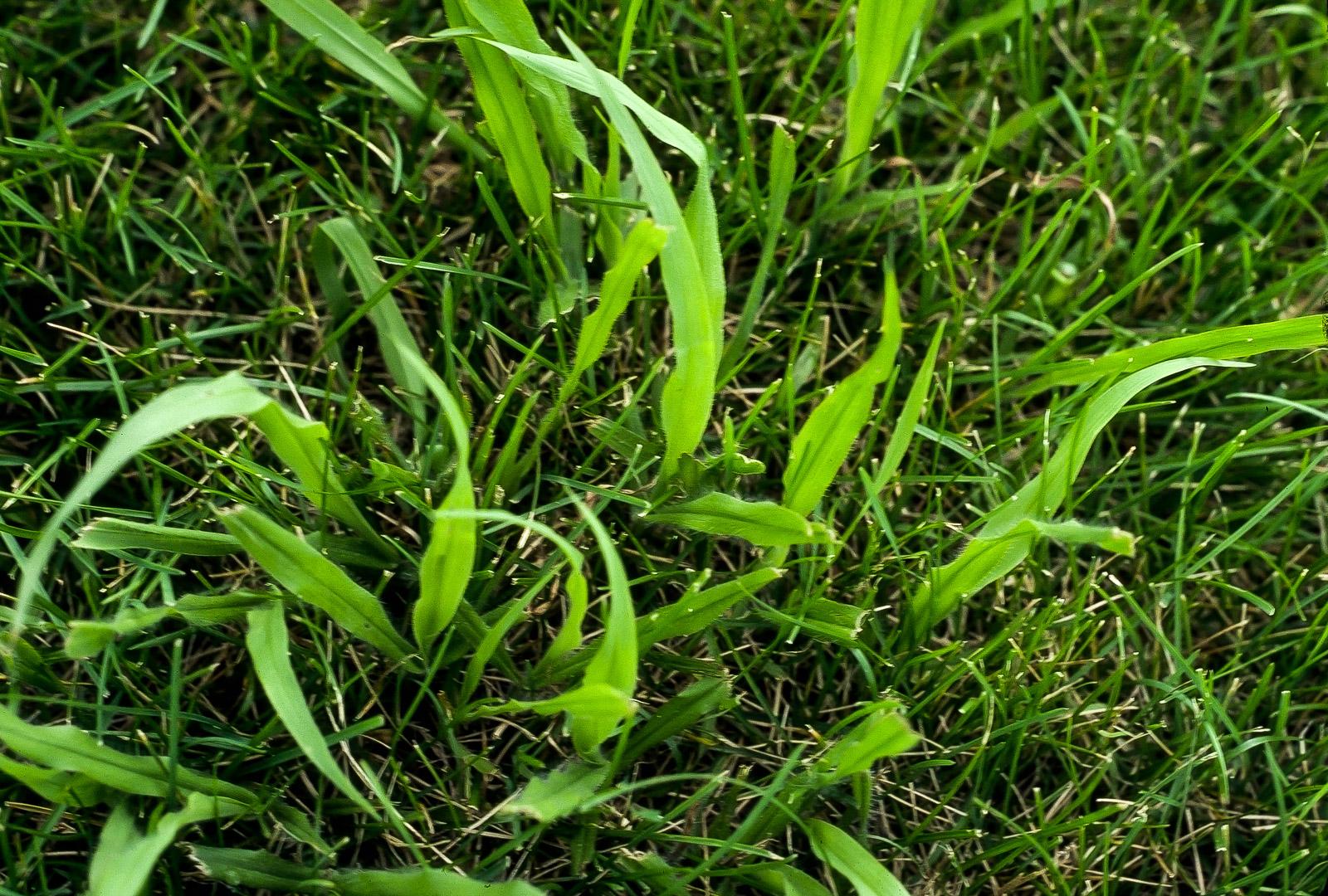
Crabgrass is a summer annual grassy weed. The two most common types of crabgrass in the northern region of the United States are the smooth crabgrass weed and the large crabgrass weed. Smooth crabgrass weeds have less hair on their leaves than the large crabgrass species. The latter is also significantly larger than the smooth crabgrass species. Crabgrass weeds, regardless of the type, generally have broad leaves and grow closer to the ground in a star-shaped pattern. Their seed heads are quite fine and small, and they grow out of the top of their stems. They grow from seeds and not from a root system, like dallisgrass. They tend to grow to form a thick mat of weeds rather than in circular clumps, like dallisgrass, with lots of side branches.
Remedy:
Crabgrass can be prevented by using a pre-emergent herbicide consisting of Prodiamine or Pendimethalin, which will act as a protective barrier in your garden. If crabgrass has already found its way into your garden, you can get rid of it by using a post-emergent herbicide. Any variant, be it a selective or non-selective option, will work. However, it’s important to note that a selective variant will target just the crabgrass, whereas a non-selective option will target the entire area you’ve used it on.
Regular lawn maintenance, in addition to using herbicide, is the best way to control crabgrass from infiltrating your lawn. Using fertilizer on your lawn to thicken it could also work to get rid of crabgrass. This is because a thick lawn will suppress the growth of the crabgrass.
Goosegrass:
Identification:
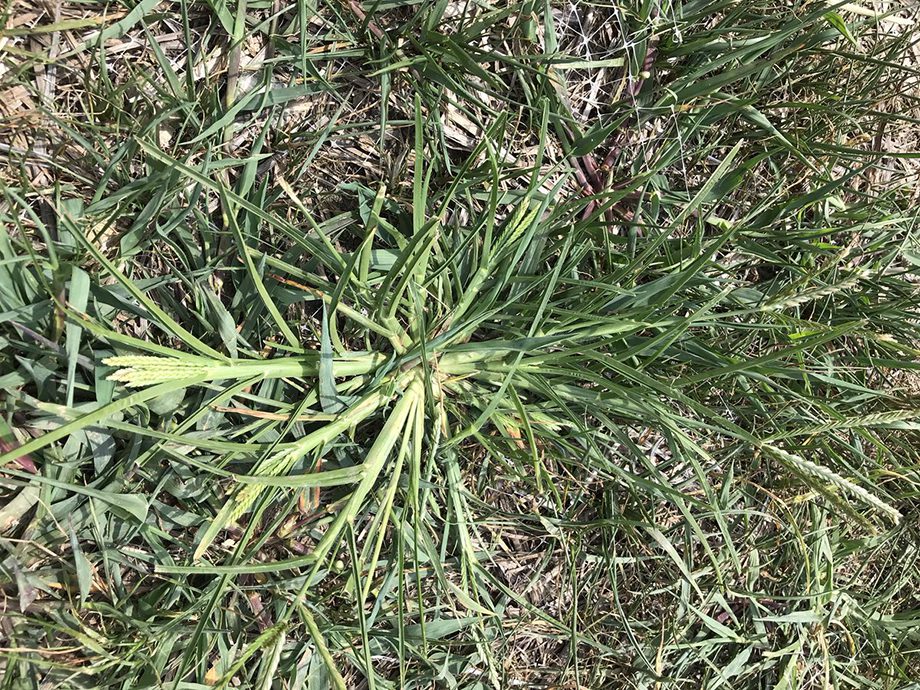
Goosegrass is a warm-weather weed that can easily stand out due to its spread-out tufts of grass and grass blades that resemble little fingers. Goosegrass is a resilient grass that can establish itself in a variety of soils, even ones that are compacted and stressed. It is an annual grass, but in tropical conditions, it could be perennial. Goosegrass is especially common in areas where there is a lot of foot traffic or along sidewalks or walkways.
Goosegrass forms leafy tufts which look like they are reclining. The color is emerald green with older blades having a small bit of white on their damaged edges. Another distinguishing trait is that this grass can stick to your clothing if you brush up against it because of all the small little hairs it has. Goosegrass has a strong, complicated root system and readily invades hard, compacted soils found in high-traffic areas. It adapts well to close, frequent mowing and even produces seeds when mowed at very low heights such as when they have invaded putting greens on golf courses.
Remedy:
Something important to note about goosegrass is that it is rarely found in healthy, dense lawns; therefore, there are many cultural practices you can implement to help keep your yard free of this pesky weed. As always, proper fertilization, mowing, and irrigation are essential to maintain a healthy lawn. Since goosegrass does well in compact, poorly drained soils, reducing irrigation so that you do not overwater, along with incorporating aeration to relieve compaction can be a big help. When looking at chemical controls, there are several pre-emergent and post-emergent options, with pre-emergents being applied initially in February or March, and a follow-up application occurring six to eight weeks later if needed. A pre-emergent herbicide serves to prevent goosegrass from appearing whereas a post-emergent controls the weed after it has appeared. Because of its late germination, many pre-emergent herbicide applications miss goosegrass, allowing the weed to grow as if the yard was not treated. If you already have goosegrass in your turf, apply a selective post-emergent treatment to the lawn.
Nutsedge is an aggressive and persistent weed that commonly infests lawns, flower gardens, and home landscapes. Nutsedge often escapes control because they're not like weed grasses targeted by most herbicides. By understanding the basics of nutsedge and effective treatment, you can kill and control these difficult, perennial lawn weeds
Identifying Nutsedge
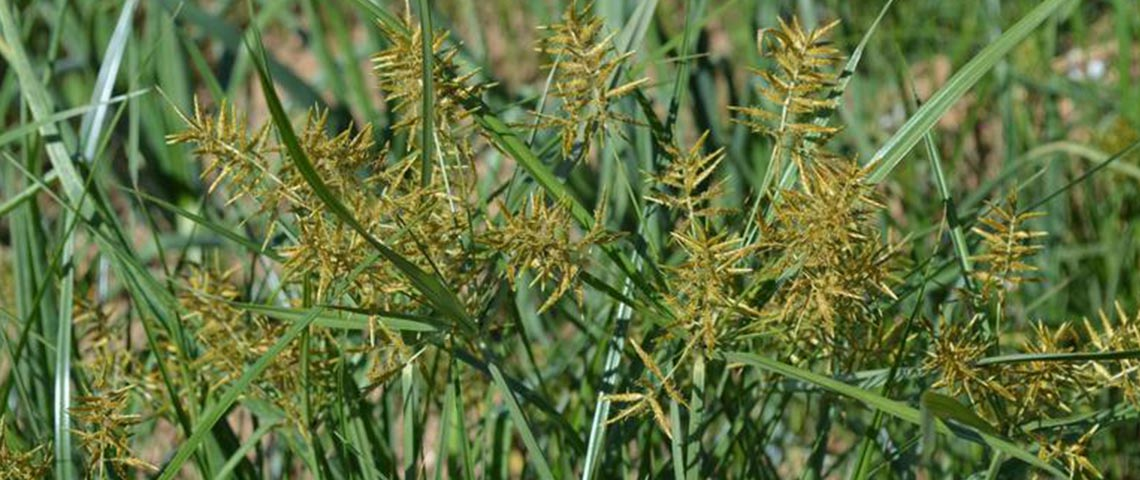
Nutsedge usually comes out during periods of rapid summer growth as it surpasses other lawn grasses that are struggling for water and nutrients. The two types of nutsedge, yellow and purple, clearly stand out against green turf. This weed produces distinctive spiky-flower clusters that are either yellow-brown or purple-brown according to the type of nutsedge.
Another key identifier is their triangular stems. Other grasses have round stems, but nutsedge forms a “V” shape and has a distinct center rib. These weeds often start in moist, poorly drained areas on your lawn. Their extensive root systems may reach up to four feet deep and can then tolerate drought.
How Nutsedge Spreads
There are several ways that nutsedge spreads and reproduces. One way is the plants can flower and release seeds that germinate and grow into new plants. These weeds also spread through underground stems that send up shoots to become plants. However, the most fruitful way nutsedge reproduces is through underground tubers known as “nutlets”.
Purple nutsedge produces rows of nutlet tubers along their length, whereas yellow nutsedge only produces single nutlets. Most nutlets form within six to ten inches of the surface but can reach up to eighteen inches deep. Nutlets may survive hidden in the soil for up to ten years before coming up to produce new plants. These depths protect nutlets from the effects of many common herbicides.
Effectively Preventing and Controlling Nutsedge
By practicing these 5 good lawn-care basics, you can actively protect against nutsedge invasions:
Healthy, vigorous grass is an excellent defense against yellow and purple nutsedge.
Correcting poorly drained areas and avoid overwatering your lawn.
Aerating your lawn as needed as it thrives in compacted soil.
Mowing your lawn at the recommended height for your grass type
Treating your lawn with an herbicide specifically made to fight against nutsedge
If you are experiencing an invasion of this aggressive weed, give us a call at LawnPro of Murfreesboro today for treatment!
Mowing performed at the correct height, frequency, and technique is essential to the health and density of your lawn. Every variety of grass has an ideal cutting height. A common mistake people make with their lawn is thinking they have to mow all the time and stop the grass from getting too tall. We will be discussing the proper mowing height and techniques for Bermuda and Fescue grass.
Bermuda:
Bermuda grass is a consistent warm-season grass. It returns every year and grows most aggressively from late spring through the hot summer months. This grass is quite sensitive to cold temperatures. The best mowing height for Bermuda grass depends on the variety that you’ve grown on your lawn. Unlike common Bermuda grass which has an inch-long stem, hybrid Bermuda grass varieties have been cross-bred to have shorter stems and low-lying crowns.
Hybrid Bermuda grass mowing height = 1 1/2 inches
Common Bermuda grass mowing height = 2 inches
The best time to mow your common Bermuda is when it reaches a height of about three inches. Therefore- after cutting off one inch (one-third of three inches), you should be left with about two inches of lush green common Bermuda grass. If you allow your Bermuda Grass to grow much higher than about 3 inches, you will scalp your lawn by removing most of the green portion of the grass when you mow. This is not only ugly, but it is absolutely horrible for your lawn. If compounded by heat and drought, scalping during the summer can kill areas of your lawn.
THIS EXAMPLE IS DEPENDENT UPON THE TERRAIN. MOST RESIDENTIAL YARDS IN OUR AREA DO NOT ALLOW FOR BERMUDA TO BE CUT LOWER THAN 3 INCHES. IF YOU DO HAVE A VERY LEVEL LOT THEN YOU CAN MOW YOUR BERMUDA AT THE HEIGHTS LISTED ABOVE.
For Bermuda grass, spring normally is a period of fast and rapid growth. It’s advisable to mow lower than the recommended height at this time of the year, to remove the dead leaf blades left behind from the winter dormancy period. From June-September, you should mow your Bermuda grass lawn less frequently during these months; preferably once every week.
You can also increase the mowing height a little bit above the recommended height as leaving behind longer leaf blades helps minimize water evaporation. By August, you should have reduced the frequency of your mowing to only when necessary.
Fescue:
Fescue is a cool-season grass, meaning most of the growth occurs during the spring and fall months. Fescue is a resilient, low-maintenance grass. It can withstand drought conditions and needs fertilizer infrequently. Overall, the ideal tall fescue mowing height is 4 inches. This is a safe length to mow your tall fescue any time of the year.
From March-May, mow your tall fescue lawn as low as 3 inches. Do not let the grass get so tall that mowing it would remove more than ⅓ of the height. This may mean mowing your lawn as often as once a week.
From June-August, mow your lawn to 4 inches. Do not allow your grass to get taller than 5 inches.
From September to November, mow your lawn to 3.5 inches.
From December to February, mow your tall fescue lawn to 3 inches.
Tall Fescue grass grows in bunches. Therefore it is highly suggested that you mow them tall. The taller the shoots of grass means the deeper the roots penetrate. Lengthier leaves allow much better photosynthesis, helping the grass grow better and strengthen its roots. Mowing the tall fescue grass higher also helps in preventing the growth of weeds. Along with mowing frequently, it is required that you should never cut your grass less than one-third of its height. Mowing your lawn less than one-third of its height can cause severe damage to the grass.
Should You Change Direction Each Time You Mow?
Yes! Why? Because when grass is mowed in the same direction over and over, it’s trained to lean one way. Also, going over the same tracks each time can cause rutting and soil compaction, which is essentially when soil particles get packed too tightly, making it hard for water and air to reach lawn roots.
Also, mowing in just one direction makes the lawn look worn out over time. Ideally, grass stems should grow straight up and stand tall. Mowing in different directions helps make that happen.
When summer sizzles, a lawn can easily fizzle, trading lush green for crispy brown shades. No one wants unsightly brown spots taking over their once-green stretch of luscious lawn. There are multiple causes of these spots, including drought, brown patch, or dollar spots. But in order to solve this problem, you have to know exactly what you’re dealing with.
Drought Stress:
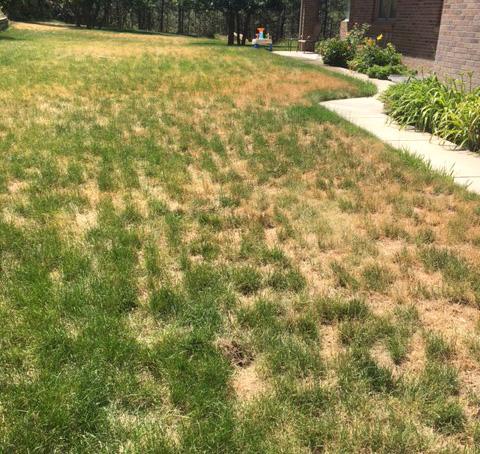
Like any plant, grass reacts to summer's high temperatures and lack of water with wilting, browning, or even death. To detect drought stress, locate a brown patch, and pull on the grass. If it won't pull easily from soil and is firmly rooted, it's likely brown due to drought. Push a screwdriver into the soil in brown and green lawn areas. If the blade slips easily into the green lawn and won't penetrate brown, the soil is dry. Next, look at the lawn as a whole. When drought is the culprit, brown patches appear randomly and in rough patterns. Lawn near a sprinkler head may be green, while the lawn further away is brown. Grassy areas in shade remain greener when parts in full sun turn brown due to drought. Lawn in low spots will remain green while higher areas turn brown.
Brown Patch:
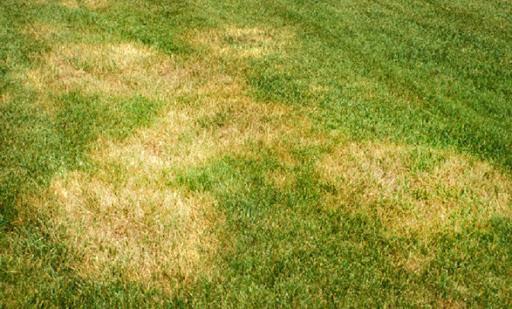
Brown patch fungus, also known as large patch disease, is a declining turf condition caused by a single species of fungus, Rhizoctonia, and often occurs in mid-to-late summer when the weather is hot and humid — making conditions perfect for the fungus to thrive. Brown patch due to fungal problems usually shows up as irregular patches. If the disease has been active for a while, the inside of the patch may recover, leaving a ring of dead grass around it. Extremely rainy or humid weather can encourage fungal outbreaks, as can lack of sunlight and poor air circulation.
Dollar Spot:
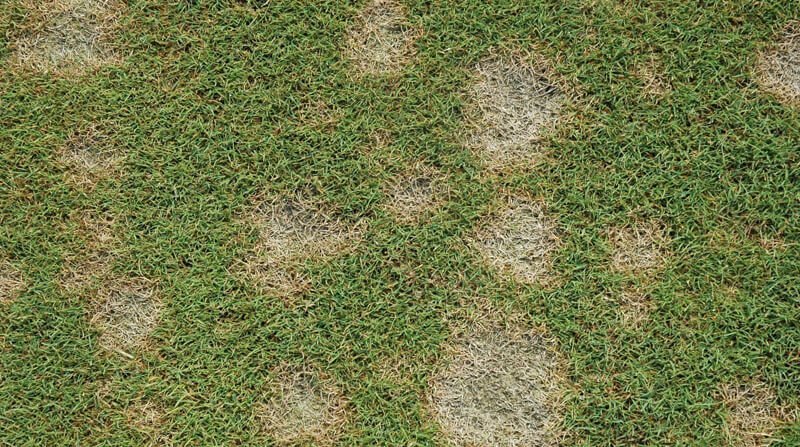
Dollar spot is caused by the fungus Clarireedia jacksonii, and this disease can make your beloved turf look like an unsightly patchwork. It is characterized by small, round, bleached straw-colored spots. It tends to occur from late spring to late fall, especially after a period of extremely moist weather. Dollar spot thrives in wet, humid conditions, so heavy dew, over-watering, late-day irrigation, and anything else that keeps grass leaves wet for long periods of time could lead to dollar spot. Other reasons you might be getting dollar spot in your lawn is from mowing too closely or not having enough fertilizer.
If you are needing assistance with brown patch or dollar spots in your lawn then contact LawnPro of Murfreesboro for treatment!