When the temperatures start to get hotter, we look forward to our lawn greening as it wakes from the winter dormancy. The last thing we want to see is weeds, especially dallisgrass and nutsedge. As a general rule of thumb, the longer dallisgrass has been established, the more difficult it will be to control. Nutsedge can infest anywhere in your lawn, vegetable garden, and flower garden. Both of these difficult weeds are aggressive and normally require professional lawn care treatments to manage a large infestation.
Dallisgrass:
Dallisgrass is a perennial weed that grows in a circular clump and these ring formations can grow to cover and smother the surrounding grass in your garden. Dallisgrass spreads primarily by rhizomes (underground roots) or seeds. The underground growth makes it difficult to eradicate as the ground roots go deep and can be well established.
This pesky weed grows in bunches or clumps, with leaves on the bottom shoots. Dallisgrass has a distinct grayish-green color and a few sparse hairs on the leaf collar and it thrives in sandy or clay soils, leaving us in the south more susceptible to visible growth. They can grow back from the root system every year, making them one of the most troublesome types of weeds.
Nutsedge:
Nutsedge outbreaks often start in moist, poorly drained lawn areas, where they quickly develop into large colonies. Their extensive root systems may reach up to 4 feet deep and once established, these weeds can tolerate drought. The two types of nutsedge, yellow and purple, clearly stand out against green turf. Other grasses have round stems, but nutsedge forms a “V” shape and have a distinct center rib. Just as dallisgrass, nutsedge also spreads via underground stems, known as rhizomes, but the most common way for it to spread is through underground tubers known as “nutlets.” Nutlets may survive hidden deep in the soil for up to 10 years before emerging to produce new nutsedge plants.
Similarities between Dallisgrass and Nutsedge:
Both dallisgrass and nutsedge can be invasive and stubborn. You can physically pull the weed but that doesn’t mean there won’t be more. The answer to how to kill dallisgrass and nutsedge is threefold: lawn health, pre-emergent treatments, and post-emergent treatments. A thick, well-maintained lawn is really the best weed killer you can have.
If you are experiencing an infestation of one of these difficult weeds, give LawnPro of Murfreesboro a call today at 615-653-3871 !
Expectations and quality are a big deal at LawnPro of Murfreesboro. If we do a good job of establishing what to expect and we deliver on the quality, then everyone is satisfied. Unfortunately, many homeowners have unrealistic expectations based on bad information or assumptions. Here are a few things every homeowner should know about their lawn and what to expect about lawn care.
1. No lawn is free of weeds.
Not even the most beautiful golf course that has a team of technicians caring for the turn on an hourly, daily and weekly basis is free from weeds. So how is it possible for a residential lawn to be free from weeds? It’s not. So what can you expect? You can expect that our weed control and fertilization program will dramatically reduce weeds in your lawn and improve the quality over the course of the entire treatment program. Slow and steady improvement is realistic.
2. Weeds don’t die overnight.
Weeds curl over the course of several days, most often 7-10 days. It also takes 3-4 weed treatments to see real results. Of course, this assumes the lawn is in “decent” shape to begin with. For lawns that are all weeds, it will take one year of service just to begin to reduce the weeds. Real improvement arrives in years 2 and 3.
3. Mowing matters.
Taller grass is healthier grass. It helps prevent weeds too. Tall grass shades the soil and prevents weed seeds from germinating. Mow from 3-4 inches based on the type of grass you have. You can check out our other blog “Proper Mowing Heights and Technique” for more information on this topic.
4.Excessive edging creates weeds.
If you edge your sidewalk or driveway excessively, cutting deep grooves into the soil to create a “sharp edge” along the asphalt or concrete, then you are creating the ideal opportunity for weeds. Weeds need bare soil, exposed to the sun.
5. Lawn care takes time.
If your lawn needs real help then expect improvement to take 2 years. Don’t judge your lawn based on 8 weeks of service. It took years for your lawn to get to the condition it's in, and it will take years to improve it.
We at LawnPro want you to have the lawn of your dreams, but setting expectations is important in achieving your goal. Give us a call today to discuss your lawn’s condition and what we can do to help!
Beautiful lawns do not happen naturally but have to be planned and created. Lawn fertilizer is one of the most important parts of the creation process. The purpose and variety of fertilizers available can be overwhelming. In order to find the right fertilizer for your yard, you need to understand the ingredients of the products you are buying.
Choosing the right fertilizer begins by knowing what nutrients are currently in your soil, as determined by a soil test. Soil nutrients, whether placed there by you or occur naturally, work together to help grass perform one primary purpose: performing photosynthesis. Lawns that are not fertilized will have to rely completely on what is in the soil for all their nutrients.
MICRONUTRIENTS AND MACRONUTRIENTS:
Lawn grasses need several micronutrients and macronutrients to stay healthy and to perform necessary plant functions. The list of micronutrients includes Boron (B), Chlorine (Cl), Copper (Cu), Iron (Fe), Manganese (Mn), Molybdenum (Mo), Nickel (Ni and Zinc (Zn). Most of the micronutrients, with the exception of iron, are usually not included in a bag of lawn fertilizer. The primary macronutrients are Nitrogen (N), Phosphorus (P), and Potassium (K) and represent the most commonly used ingredients in lawn fertilizer. Each nutrient plays a specific role in overall plant health: Nitrogen (N) promotes green, leafy growth. Phosphorus (P) is important for strong roots and healthy fruit and seed formation. Potassium (K) promotes vigorous growth, hardiness, heat tolerance, and disease resistance. These three nutrients are very important for plant function and are the elements most deficient in soils.
WHAT IS IN LAWN FERTILIZER:
What do N, P, and K mean? What do the numbers on the bag mean? The three numbers on a fertilizer bag represent the three primary macronutrients, which are Nitrogen, Phosphorus, and Potassium, in that order. These 3 numbers on the bag represent the nutrients grass needs in the greatest amounts. More specifically, the numbers on the bag represent the percentage by weight that the bag contains each element. For example, if the bag weighs 25 lbs and the first number on the bag (Nitrogen) is 10, then the bag contains 2.5 lbs of Nitrogen. If the bag weighs 30 lbs and the first number is 20, then the bag would contain 6 lbs of Nitrogen.
TYPES OF FERTILIZER:
Synthetic fertilizers are the most often used type and come in liquid and granular forms. Granular fertilizers are the easiest to apply and require the least expensive equipment.
Liquid Fertilizer: Liquid lawn fertilizer may require special equipment to apply. For small lawns, you can use a handheld sprayer or backpack sprayer. For larger lawns, you can purchase 10 or 20 gallon sprayers at your local farm and home store. For the most part, both liquid and dry fertilizer perform equally well.
All Mineral vs Slow Release Lawn Fertilizer: Some fertilizers are referred to as “all mineral”, which means all elements are released quickly as soon as water is applied. All mineral lawn fertilizers are usually the least expensive but often contain no instructions for storage or safe use nor any information on how much to apply. Due to the high salt content, they must be used carefully and watered in thoroughly after use to prevent any possible burning of the grass.
Slow Release Nitrogen: More expensive fertilizers will contain higher quality ingredients and often more than one form of available nitrogen. Usually, at least one form of nitrogen in the bag will be slow release. By blending different ingredients with different release rates, they can be marketed as “spring”, “summer”, and “fall” or “winterizer” fertilizers.
Do you envy your neighbor’s dark-green luscious grass? If you’ve noticed that your lawn’s color is a lighter green or even bordering on yellow, it’s possible that your soil has an iron deficiency. Properly adding iron to your lawn requires careful application and timing. If your lawn has a soil deficiency and you want greener grass, you can take steps to remedy the problem, which we’ll outline here.
Why is Iron Important for Your Lawn?
Iron (Fe) for lawns is needed to support chlorophyll production and reduce moss growth. The greener the grass, the more chlorophyll your lawn is producing. Pale green grass growing in your yard suggests that your lawn grasses aren’t making enough chlorophyll to produce that vibrant green grass you want to see growing in your landscape. Iron is particularly effective with fescue and bluegrass, helping these grasses stay deep green during the hot summer months without the increased growth caused by nitrogen fertilizers.
If your lawn is actually a yellowish-green, it could be suffering from a condition called iron chlorosis, which is a severe iron deficiency. If your lawn has acidic soil, it may struggle to absorb the iron that’s present in the soil. Be careful to determine your soil’s needs before you introduce a new active ingredient to it.
Types of Iron Supplements for Lawns
Iron for lawns comes in various forms. If your lawn lacks iron, you can rely on liquid iron supplements or other forms that we’ll discuss here.
Liquid Iron - Liquid iron supplements for lawns tend to be the most popular. With proper application or iron, your liquid iron supplement can support fast chlorophyll synthesis, turning your lawn green quite quickly.
Chelated Iron - Chelated iron is a liquid iron fertilizer that helps to amend iron-deficient soil. Chelated iron is a great option because it prevents the iron in your soil from turning to rust and causing rust stains on your grass, which can happen with exposure to water and air.
Granular Iron - If your grass and plants have an iron deficiency, you can add granular iron to your lawn to also correct the problem and enhance their growth. Granular iron supplements are easy to apply, but it’s also easy to miss spots. Granular iron takes somewhat longer to achieve those deep green results you’re looking for.
How often can you apply iron to your lawn?
While many property owners only spray liquid iron once per year, others may apply iron more often depending on the nutrient needs of their grass. Although you can apply iron more often than once per year, take care not to overdo it with iron supplements in your lawn or garden or you could throw off the pH balance of your soil. Adding iron in excess can leave your grass looking a winter gray rather than a vibrant green.
What to Watch Out For When Applying Iron
Remember to test your soil before you add iron. Other soil factors may lead to problems for various grasses, including yellowing. It’s important to be aware that iron can stain concrete, and therefore you should be careful to avoid walkways, athletic courts, and concrete driveways when applying iron to your lawn. Also avoid spraying your iron supplement on other garden plants, which might not need the nutrient.
If you believe your lawn may have an iron deficiency, then give us a call today at 615-653-3871!
The trees and shrubs on your property are a valuable part of your landscape and therefore important for you to protect. If you have trees and shrubs that are suffering, one potential culprit is pests like mites and insects. In order to help you understand what you may be dealing with, we’ve rounded up a list of some of the worst landscape pests in Tennessee.
Aphids:
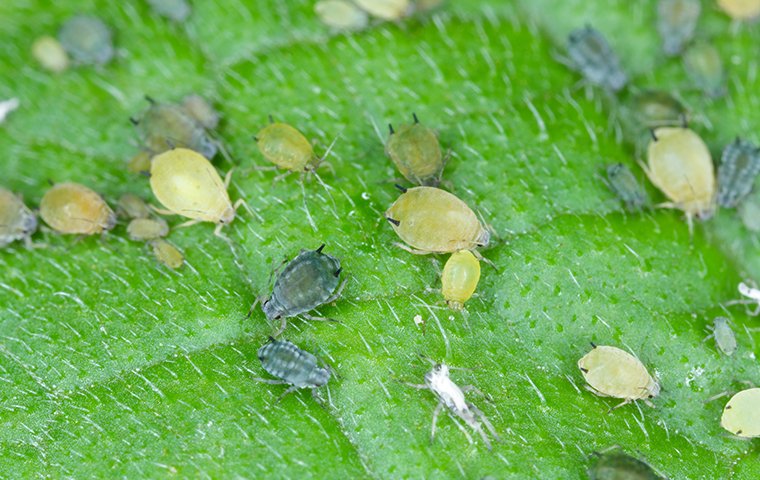
Aphids are soft-bodied insects that use their piercing, sucking mouthparts to feed on the plant sap in leaves, stems, and roots. They tend to feed in groups and prefer new growth. Aphid damage causes yellowing leaves and you may also notice foliage or stems covered in a sticky substance, a sign that pests have been feeding on sap.
Leaf Miners:
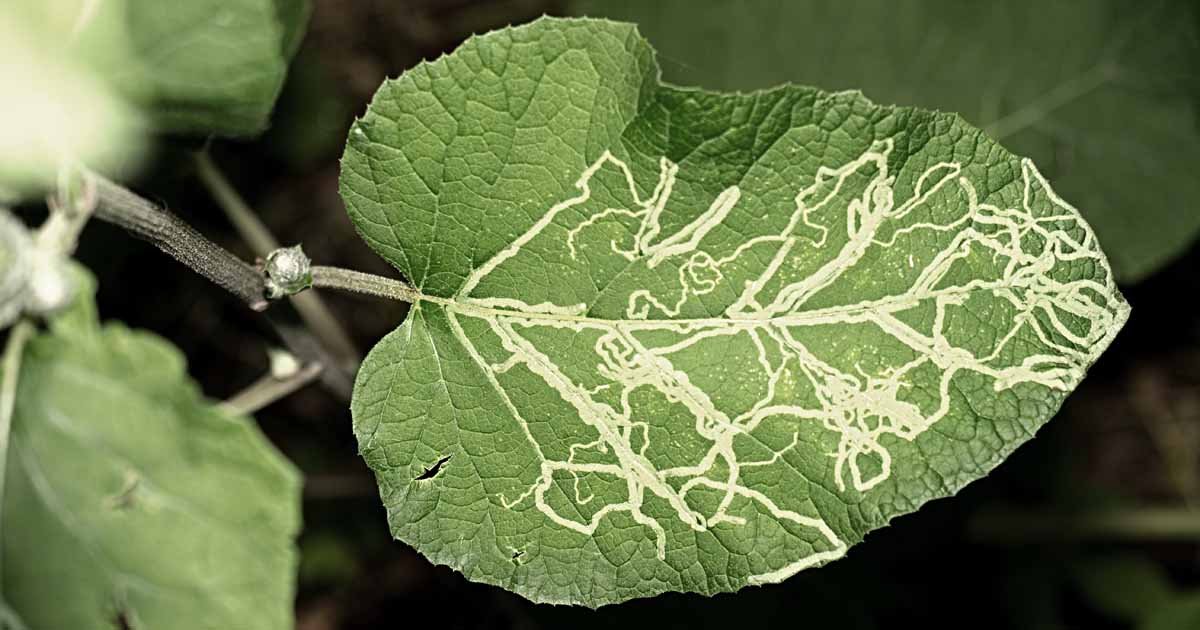
Leaf miners are tiny black flies. It is the larvae of these flies that cause tree and shrub damage, which shows up as yellow squiggly lines in the leaves. These lines are where larvae have bored their way through the interior of the leaf. The damage can also appear as spots or blotches.
Spider Mites:
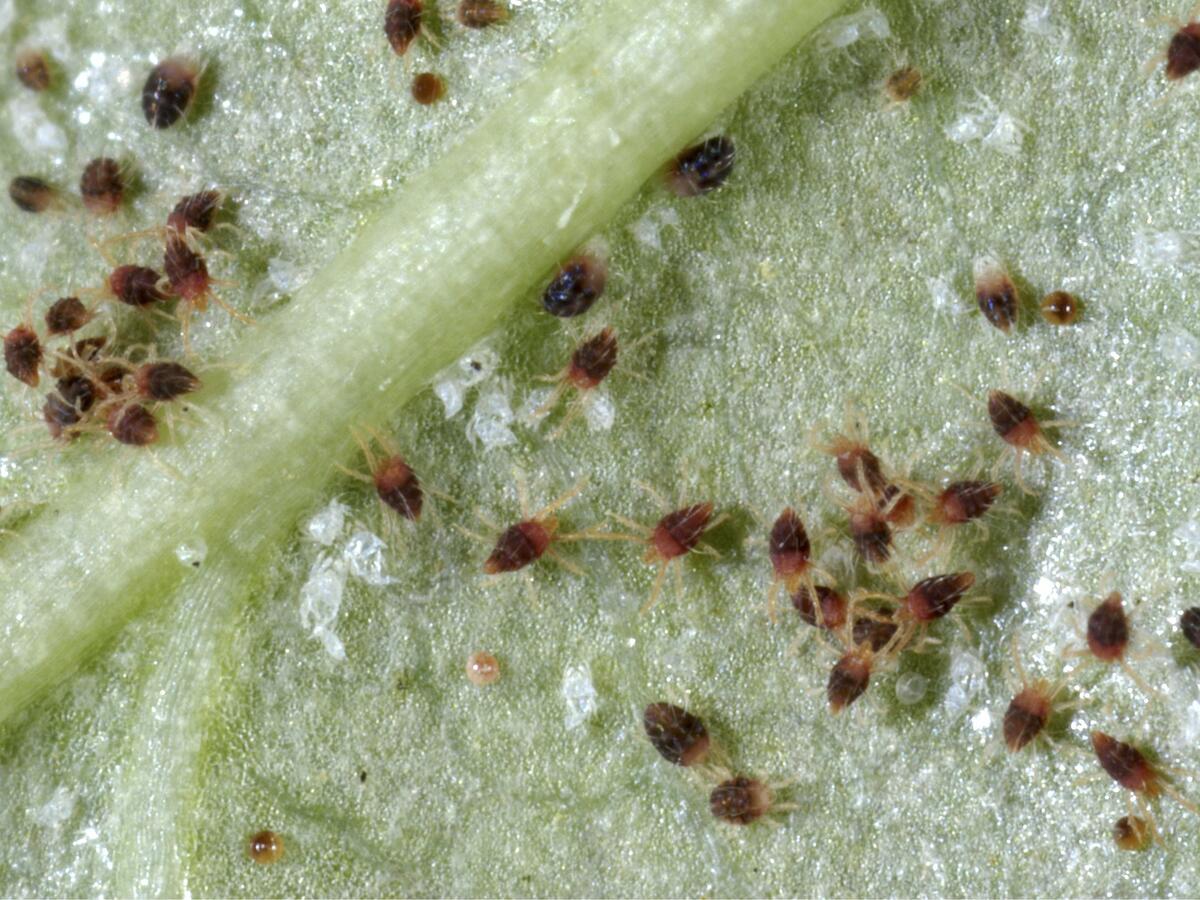
This mite has 8 legs and resembles a spider, however, it is incredibly tiny. Although there are other types of mites, spider mites are the most notorious and are highly destructive. There are many plants on which we find spider mites including Boxwood, Arborvitae, Burning Bush, and Spruce, to name just some. Spider mites use their piercing mouthparts to feed on the chlorophyll in plants, which can lead to white spots or stippled appearance. As these pests continue to feed, the damaged foliage will eventually turn brown and fall off.
Mealybugs:
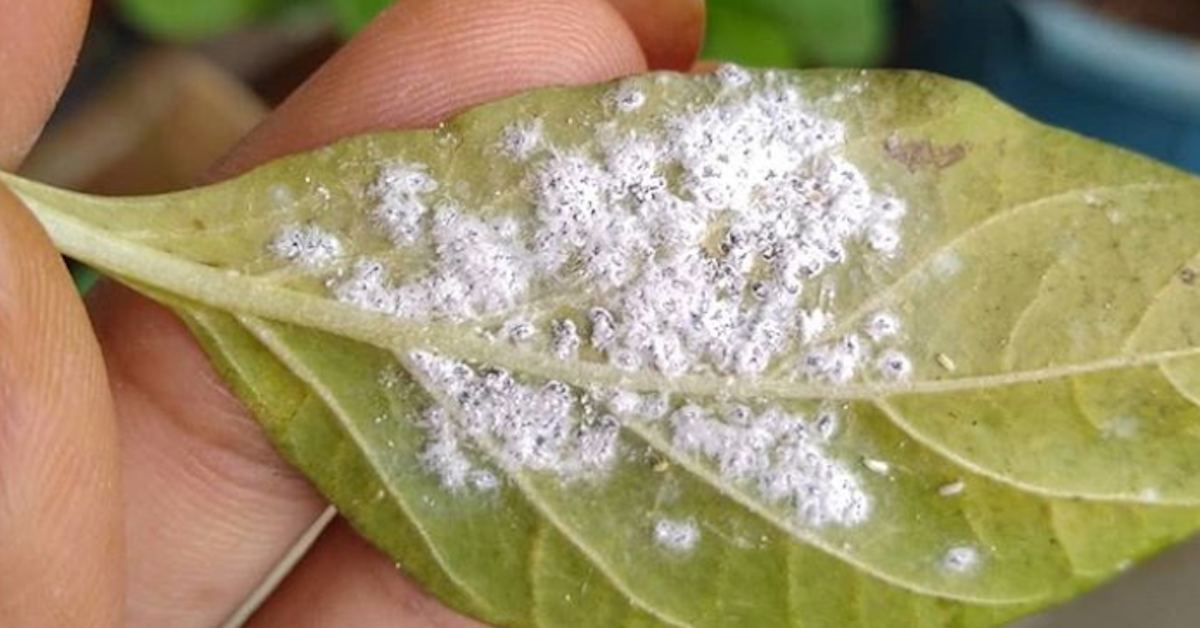
These tiny pests (sometimes no bigger than half a millimeter long) are white in color and often gather on the part of the plant where the leaves attach to the stem. All plant species are at risk for a mealybug infestation as they are not very discerning. Mealybugs feed by sucking sap from plant roots, crowns, stems, twigs, flowers, fruit, and leaves. They leave behind a sticky substance that attracts other pests like ants.
Bagworms:
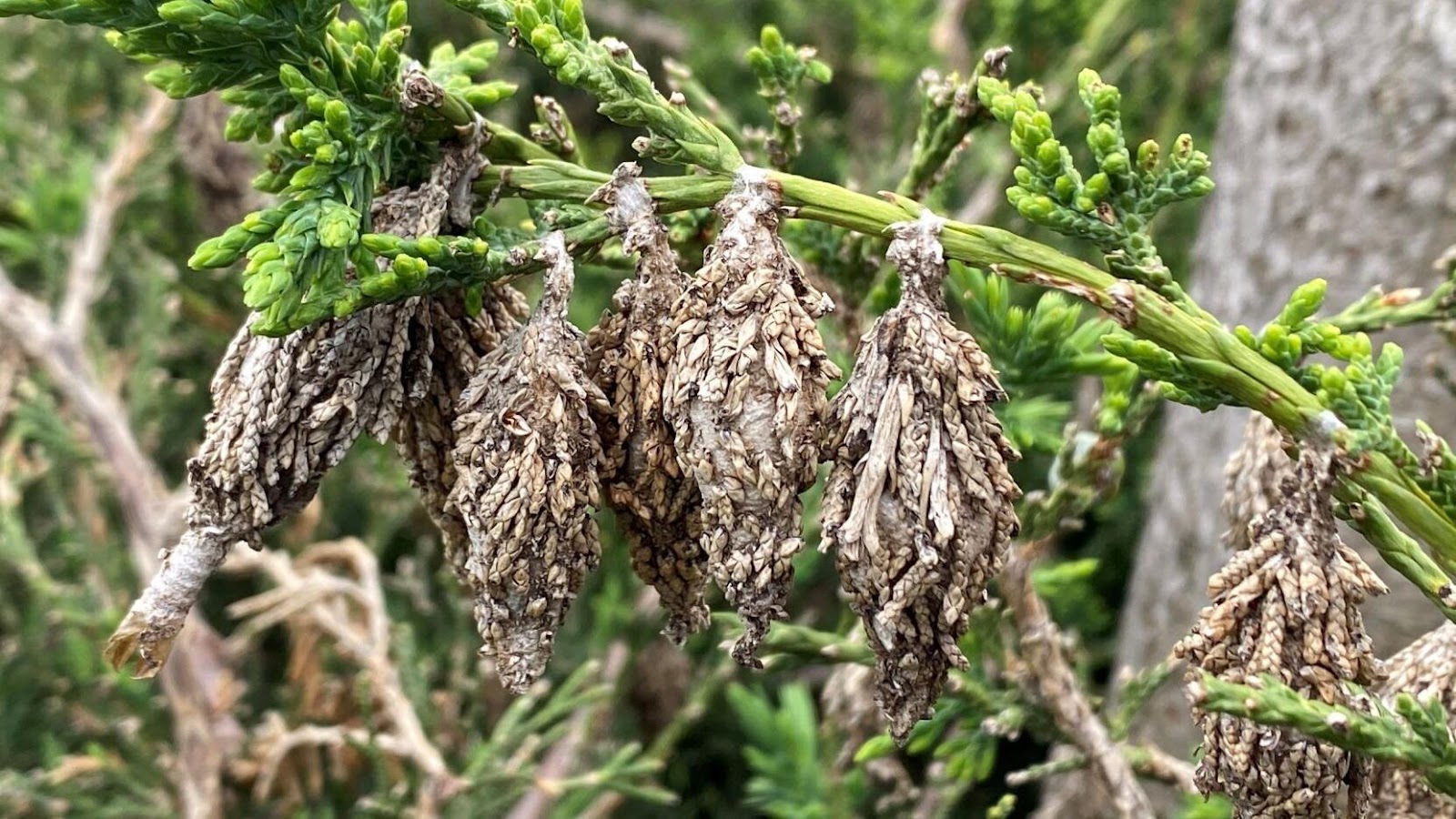
This pest gets its name from the bag that it constructs with silk and pieces of the plant’s foliage. The adult bagworm larvae pupate and turn into a moth in the fall, female moths then lay up to 1,000 eggs in each bag, which hatch in the spring. The young larvae, though tiny, are highly destructive as they voraciously feed until they grow to be a full inch.
Scale Insects:
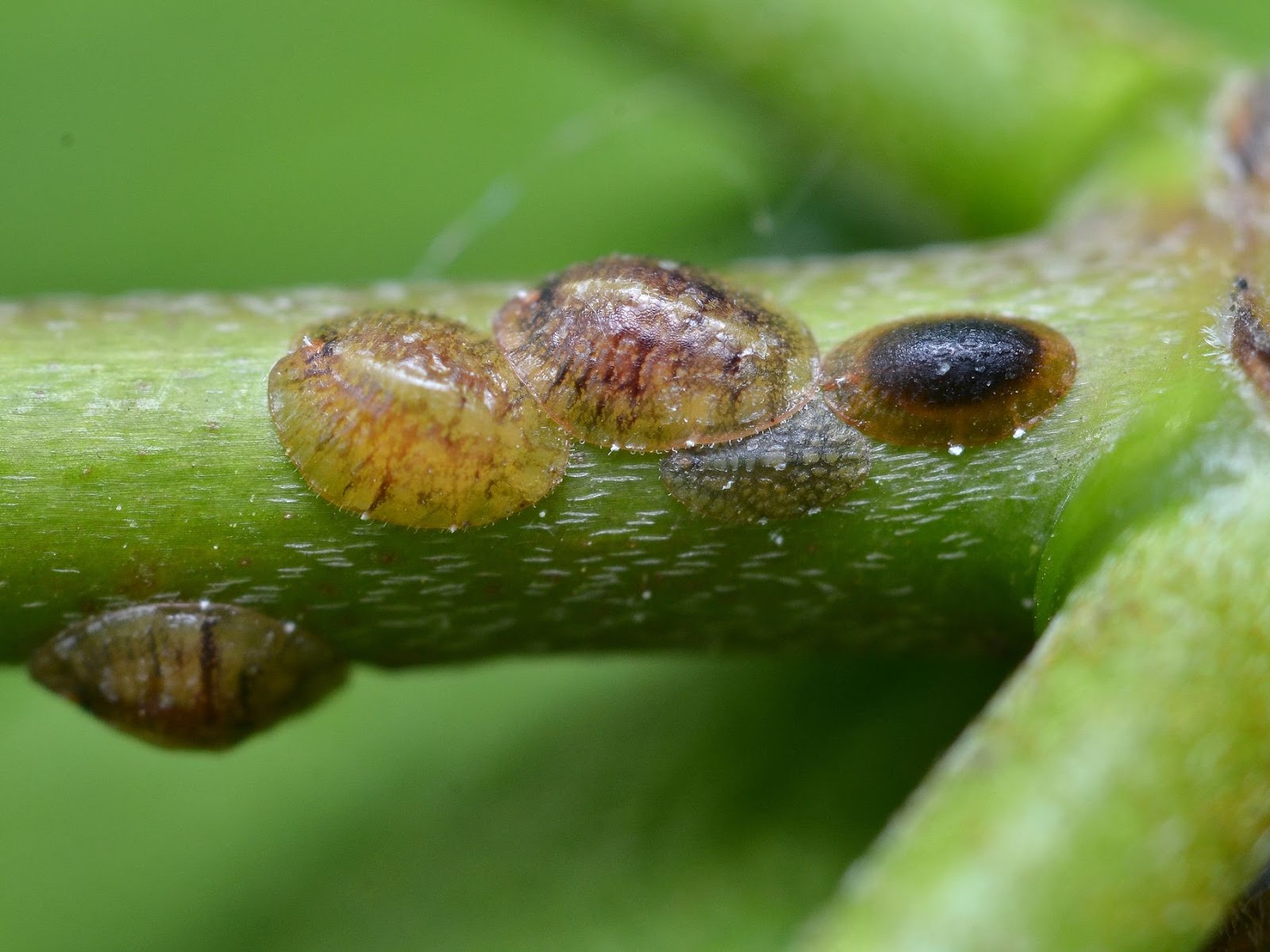
Scale insects are sap-feeding insects named for the scale that covers and conceals their bodies. Depending on the species of scale, you may find them on tree branches, stems, foliage, or fruiting bodies. Scale feed using their sucking mouthparts to drain your plants of sap. We often find scales on hollies.
Japanese Beetles:
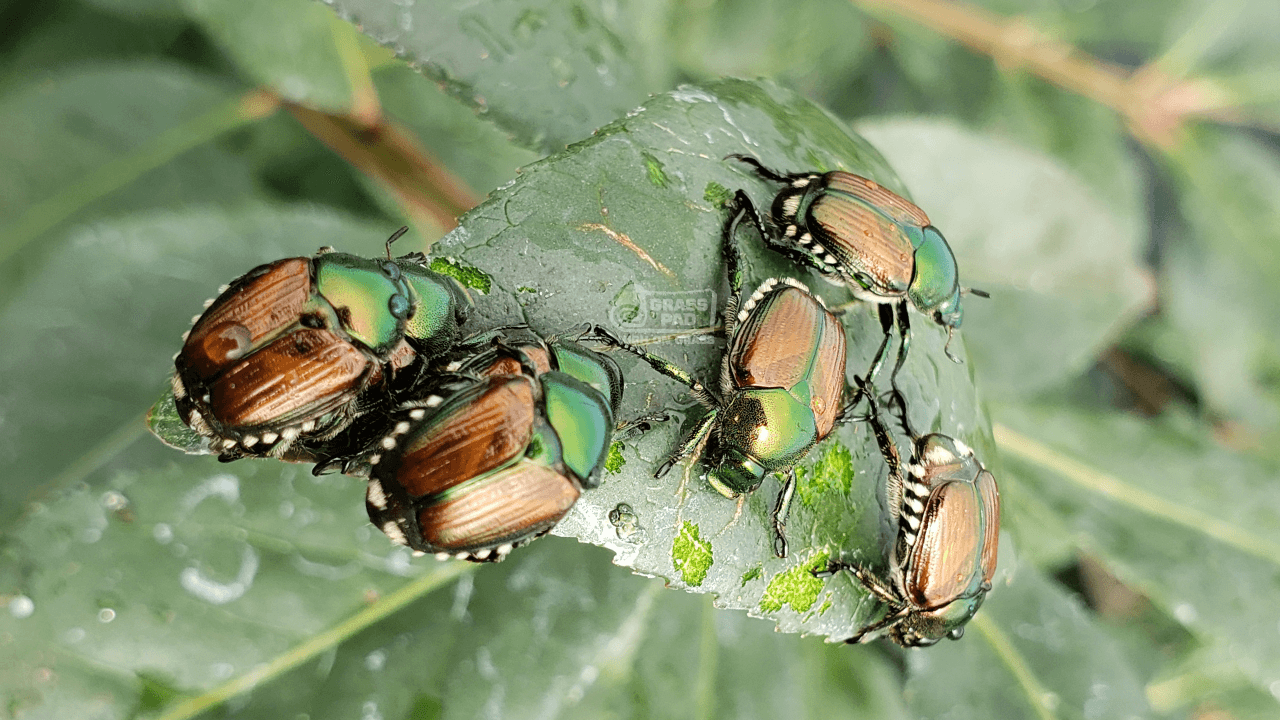
Japanese beetles are shiny with a metallic hard shell and are known to cause damage to some 300 species of plants including roses, birch trees, linden trees, and more. There’s a good chance that you’ve seen them before as they’re hard to miss with their shiny shell and noticeable size. The biggest problem with this pest is that they feed in groups. While a single beetle wouldn’t do much damage on its own, Japanese beetles are found in large groups that do quite a bit of damage feeding on leaves.
Lace Bugs:
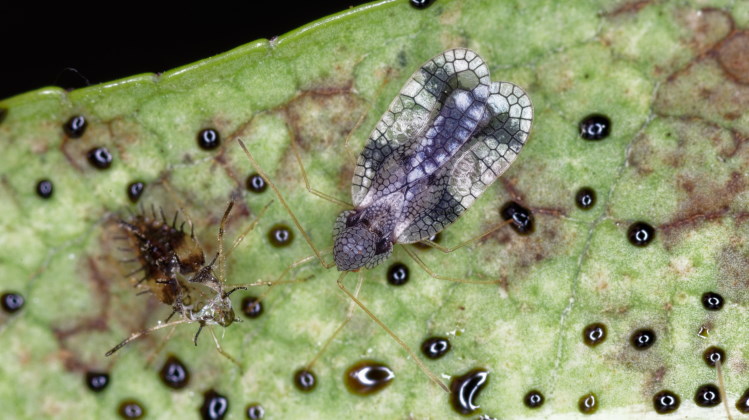
Though tiny, these pests feast on the underside of your leaves, sucking out the plant fluids. In Memphis, TN and Olive Branch, MS, we see this problem most often with Azaleas. If you have these shrubs dying, lace bugs are a possible culprit. Lace bug damage will look like silvery, white, or yellow spots that were caused by the lace bugs sucking on the leaf.
Whiteflies:
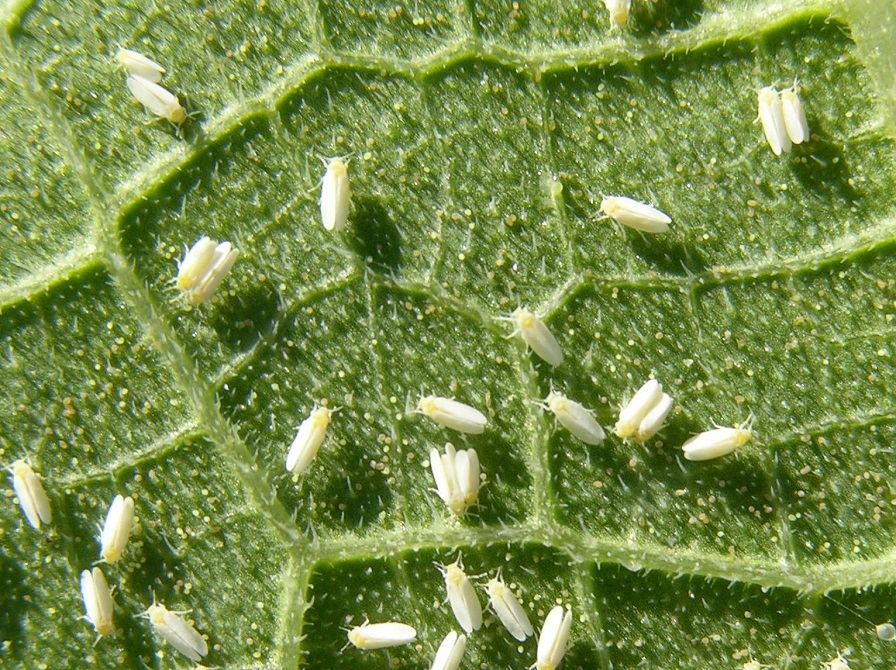
These small winged insects have a powdery wax that protects them while also making them easy to identify. Whiteflies use their piercing mouthparts to suck the sap out of your plants. This will lead to leaf damage. In addition, they also excrete honeydew which attracts other nuisance pests to your plant.